
Across parts of Erewash, a familiar debate is intensifying – not about whether new homes should be built, but whether the infrastructure to support them is already under strain.
In Sandiacre, Risley and neighbouring areas, residents describe a growing sense that multiple pressures are converging at once: existing traffic linked to major employment sites, proposed housing developments, and already stretched local services.
Individually, each issue may be manageable. Together, many say, they are becoming something else entirely.
A daily reality, not a future concern
For some residents, the impact is already being felt in immediate and tangible ways.
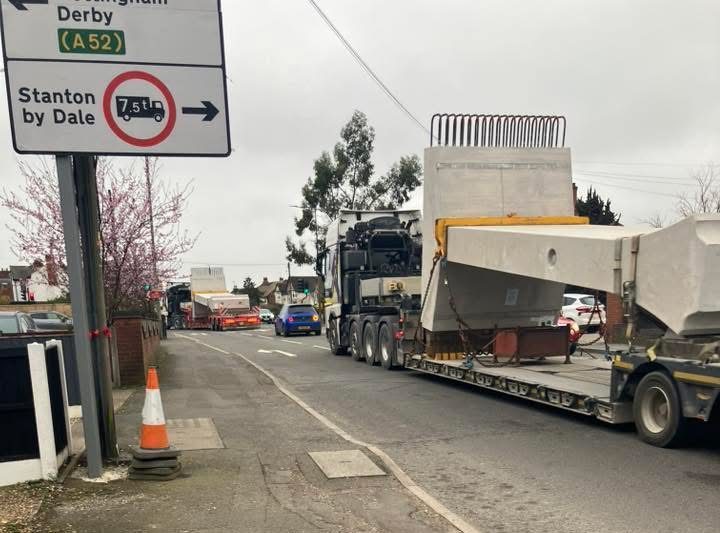
Reports shared in local community groups describe early morning disruption from HGV traffic, with one resident stating are “woken at 4am by lorries”. Others point to concerns around dust and air quality, describing visible build-up over short periods.
Traffic congestion is another recurring theme. Key routes are described as operating at or near capacity, with particular pressure around motorway junctions during peak hours.
“It’s not just inconvenient,” one resident commented. “It’s constant.”
More homes, more pressure?
Against this backdrop, new development proposals at sites including Stoney Clouds and Risley are raising fresh questions.
Residents are keen to stress that opposition is not necessarily to housing itself. Instead, the focus is on what happens around it – the roads, healthcare provision, school places and wider infrastructure that support growing communities.
“Even small developments add up fast,” one resident said. “150 homes here and 150 there quickly becomes hundreds more cars and more pressure on services that are already beyond capacity.”
This cumulative effect – rather than any single scheme – appears to be driving much of the concern.
The Stanton factor
Compounding the issue is the ongoing impact of traffic linked to Stanton and surrounding industrial activity.
HGV movements, in particular, are frequently cited as a major contributor to congestion and disruption. For some residents, this represents an existing baseline pressure that has not yet been fully addressed – even before additional development is considered.
The result, they argue, is a system already under strain being asked to absorb further demand.
Calls for clarity – and accountability
As frustration grows, attention is turning to decision-makers and whether sufficient planning is being done to ensure infrastructure keeps pace.
Residents are asking increasingly specific questions:
- What engagement has taken place with highways authorities and NHS services?
- What commitments have been secured to support growth?
- What is the timeline for delivering improvements?
There is also a broader question emerging – not just about individual developments, but about how cumulative impact is assessed and managed.
Several local councillors, community groups and residents have already raised concerns, and there are now calls for a more coordinated response.
Beyond one development
What is becoming clear is that this is not a debate about a single planning application.
It is about how multiple changes – housing growth, industrial traffic, and service capacity – intersect in the same place at the same time.
For residents, the concern is not abstract. It is rooted in daily experience: disrupted sleep, congested roads, and increasing difficulty accessing services.
“Words aren’t enough”
Underlying much of the discussion is a growing sense that while the issues are recognised, the response has yet to match the scale of the challenge.
“People don’t need sympathy or statements,” one resident told us. “They need action.”
As further developments are considered, that message is likely to become louder.
The question now being asked across parts of Erewash is a simple one:
At what point does ‘growth’ start to look like strain – and who takes responsibility when systems fail?