
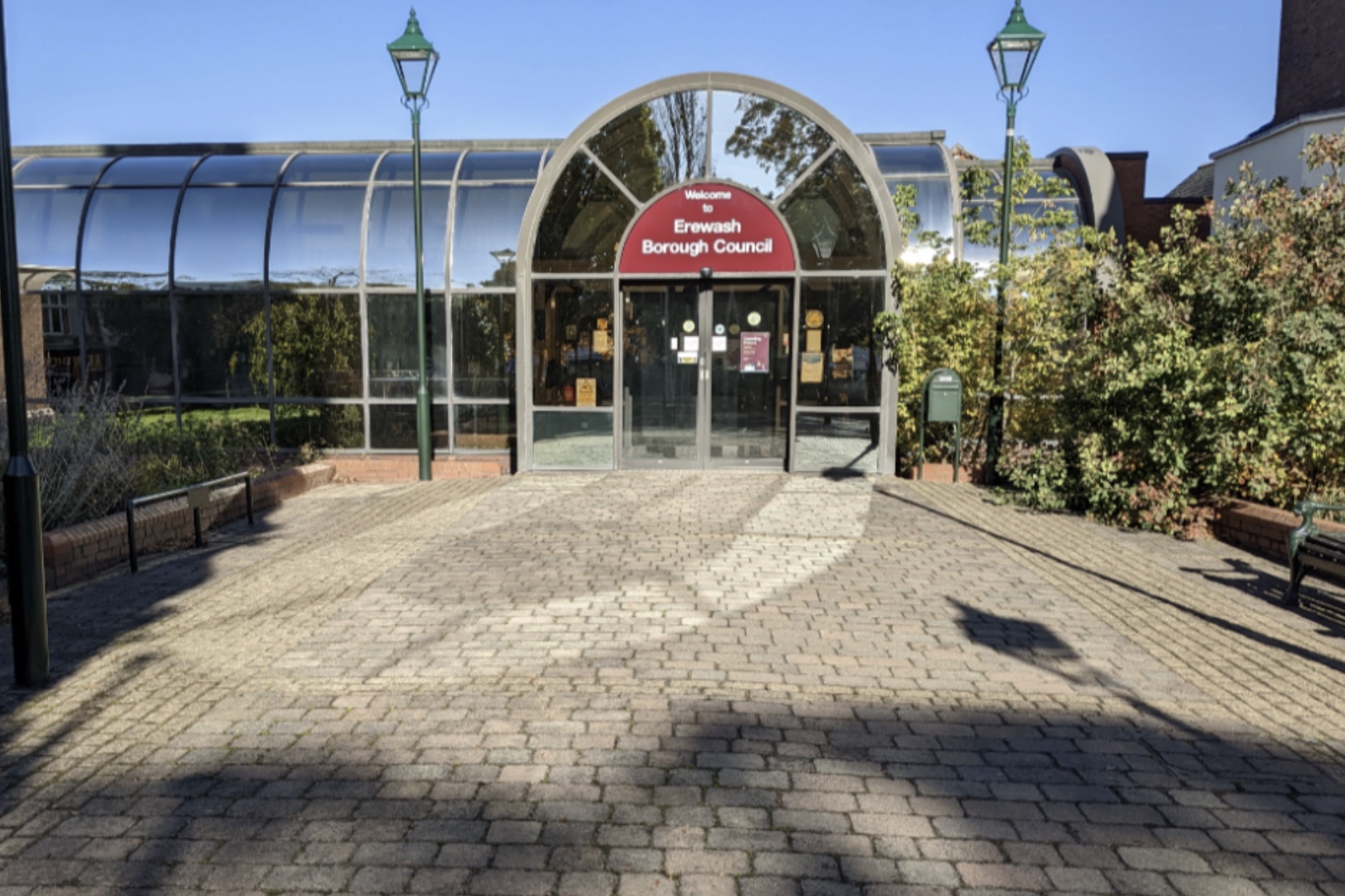
A packed public gallery watched councillors clash over Green Belt development, flooding, housing targets and the future of Erewash itself as the borough formally launched work on a new Local Plan.
Residents from Sandiacre, Kirk Hallam and Breaston used Wednesday night’s Extraordinary Council meeting to challenge councillors on some of the borough’s most controversial development issues, including land at Larch Drive, concerns about flooding in Breaston and long-running questions over the former steelworks slag heap in Kirk Hallam.
By the end of the evening councillors had voted to begin work on a new Local Plan, but not before opposition councillors questioned whether taxpayers should be spending more than £1.5 million on a process that may not be completed until after Erewash Borough Council itself ceases to exist under local government reorganisation.
The meeting marked the first formal step in creating a replacement for the abandoned Core Strategy Review, which was withdrawn by the council in January following criticism from the Planning Inspector.
For supporters, the new Local Plan is essential if Erewash is to retain control over where future development takes place. For critics, it risks becoming an expensive exercise that could ultimately be overtaken by changes to local government.
Residents put their concerns directly to councillors
Before councillors debated the report, members of the public took the opportunity to raise concerns about several of the most contentious planning issues currently facing the borough.
One of the first questions came from David Tindsley, who asked whether land north and west of Larch Drive in Sandiacre – a site that attracted more than 500 objections during consultation on the previous Core Strategy Review – would be included in the new plan.
He also questioned whether planning applications affecting the site could be considered before the new Local Plan process is complete.
Councillor Curtis Howard, Erewash’s Lead Member for Town Centres, Regeneration and Planning, said he could not say whether the site would feature in the new plan because the process had not yet reached the stage where potential development sites are being assessed.
That theme would become one of the key messages of the evening.
Repeatedly, councillors stressed that no sites have yet been selected and that the process is effectively starting again from scratch.
Concerns about affordable housing and HMOs were also raised.
Derbyshire County Councillor Jodie Brown asked how the council intends to ensure future housing developments provide genuinely affordable homes for local residents rather than simply increasing opportunities for buy-to-let investors.
In response, Howard said young people who grow up in Erewash are increasingly struggling to afford homes locally and described the growth of HMOs as “a particularly nasty side effect” of the housing crisis.
Perhaps the most passionate contribution came from Kirk Hallam resident Bev Harrison, who questioned whether land previously proposed for development close to the former steelworks slag heap could return as part of the new Local Plan.
She raised concerns about potential environmental risks and whether future homebuyers would be fully informed about the site’s proximity should development ever be proposed there.
Howard again stressed that no decisions had been made about any site and said any proposal would require fresh assessments and public consultation.
Flooding was another major concern.
Resident Anthony Ralphs questioned whether development on flood-prone land should include measures to protect existing homeowners if future flooding affects insurance costs or property values.
The concerns echoed many of the objections previously raised by residents in Breaston and elsewhere during debates surrounding the former Core Strategy Review.
What has actually been approved?
Despite the political arguments that followed, the decision before councillors was relatively straightforward.
Members were asked to approve an additional £116,500 funding allocation, a timetable for preparing the new Local Plan and a formal Notice of Intention to Commence Local Plan Preparation.
The timetable approved by councillors will see the first public consultation begin on 22 June 2026.
A second consultation on proposed plan content and evidence is scheduled for October, while consultation on the final Proposed Plan – including any site allocations – is currently expected to begin in April 2028.
The council is aiming to adopt the completed Local Plan in February 2029.
Crucially, councillors stressed that the consultation beginning this month is not about specific development sites. Instead, residents will be asked what issues they believe the new Local Plan should address.
‘Vultures swooping down on Green Belt’
The debate itself centred on a fundamental question: does Erewash need a new Local Plan now, or should it wait?
Opening the discussion, Councillor Howard argued strongly that the borough could not afford to delay.
He pointed to the recently submitted proposal for up to 100 homes on the former Western Mere School site in Breaston as an example of how developers can bring forward schemes outside a Local Plan framework.
Without an up-to-date plan, he argued, decisions about housing, infrastructure, schools, healthcare and flood mitigation increasingly become reactive rather than strategic.
Using some of the strongest language heard during the meeting, Howard warned that speculative developers could continue targeting Green Belt land. He described such proposals as:
“Speculative, short-termist vultures swooping down on our Green Belt, seeing what they can grab hold of.”
His argument was supported by figures contained within the council’s report.
According to officers, Erewash has failed to meet its annual housing target in all but one of the last 12 years, creating a shortfall of more than 1,500 homes. The report also warns that around 1,500 homes could potentially secure planning permission before a new Local Plan is adopted.
Supporters of the plan argued that without an up-to-date planning framework, the council risks losing influence over where development takes place and what supporting infrastructure is delivered alongside it.
Labour councillors repeatedly stressed that producing a Local Plan is a legal requirement and warned that failing to do so could leave Erewash with even less control over future development.
‘Absolute madness’
Opposition councillors were unconvinced.
Conservative Group Leader Councillor Wayne Major described the proposal as “absolute madness” and questioned whether the council should be embarking on a process expected to run until 2029 when Erewash Borough Council may no longer exist by then.
Current local government reorganisation proposals are expected to replace Erewash with a larger unitary authority, leading several councillors to question whether work undertaken now could ultimately be overtaken by future decisions.
Cllr Major also argued that infrastructure concerns were being overlooked. He said residents consistently raise concerns about roads, schools, GP surgeries and public services whenever housing developments are proposed, yet those issues remain unresolved.
Several opposition councillors questioned whether infrastructure planning should come before housing allocations rather than follow them.
Others argued that Green Belt land would remain under pressure regardless of whether a new Local Plan is prepared.
The estimated cost of the process also became a major point of contention.
Council papers show that staffing and operational costs associated with preparing the Local Plan amount to approximately £861,000 over three years, while specialist evidence and technical studies are expected to cost around £725,000.
Combined, that represents expenditure of more than £1.5 million.
Supporters argued that failing to produce a Local Plan could ultimately prove far more costly.
How councillors voted
Following the debate, councillors approved the recommendations and formally launched work on the new Local Plan.
A recorded vote was requested and the motion was carried despite opposition from Conservative and Reform councillors.
The approval means Erewash Borough Council will now move into the first stage of consultation later this month.
What happens next?
For residents, the next stage is likely to be the most important.
The first consultation opens on 22 June and runs until 17 July, giving residents, businesses and community organisations an opportunity to tell the council what issues they believe the new Local Plan should address.
Developers will be invited to submit potential sites later in the process, with formal consultation on proposed site allocations not expected until 2028.
The key points for residents are:
- Consultation opens on 22 June.
- Residents will be able to submit their views.
- Developers will be invited to propose sites later this year.
- No housing sites have yet been selected.
- The council is aiming to adopt the new Local Plan in February 2029.
If Wednesday night’s meeting proved anything, it is that the arguments that surrounded the previous Core Strategy Review have not disappeared.
The old plan may be gone, but the debate over where Erewash should grow – and who should decide – is only just beginning.
2 Comments
The previous Erewash Core strategy plan, of which I have a full copy, and undertaken by the previous Conservative administration, was a poor effort to say the least!
The previous Core strategy was compiled over 10 years previously, and was seriously outdated and disregarded many aspects that had moved forward in that time, especially developments undertaken by neighbouring local authorities, and took little, or no cognisance, of their plans.
With little, or no positive action , to implement the plan over that time period it was doomed for failure.
Despite suggested revisions to the existing Core Plan, by the current administration, it was always going to be a long shot to get it accepted by the associated Central Government planners. It was simply inadequate.
Consequently, a new Core Plan was required.
I share the concerns of many residents and businesses that all this effort will be an expensive waste of time, resources, money and effort!
If the proposals to reorganise the existing local councils, into two mega Derbyshire Authorities, does go ahead, and that project is also costing a fortune to assess and possibly implement, then any other new Core Plan could be out of sync and be a futile, and expensive effort!
Compromises will have to be made all around to reach consensus on any new Core Plan. That is a given. There will be winners and losers. Consequently, it is absolutely essential that residents and businesses collectively ensure that they make the effort and contribute constructively to all consultation processes.
I apologise. It was remiss of me not to include my name on my comments.
Peter Clay, Legs Wine Bar, South Street,Ilkeston.