
[Update – January 2026: Since this article was originally published, the historic cottages at 3 & 4 Lows Lane – once the birthplace of Hugh Oswald Short and marked with a blue plaque – were demolished in October 2025, despite being classed as buildings of historical interest. Permission for demolition was granted by Erewash Borough Council, and when the wider community became aware, demolition was swiftly carried out by Verdant Regeneration Ltd before there was meaningful opportunity for preservation or challenge.]
At first glance, the red-brick cottages at 3 and 4 Lows Lane, Stanton-by-Dale, might seem ordinary. Yet inside one of them, in 1883, Hugh Oswald Short was born – the youngest of three brothers who would go on to shape the future of aviation.
A Family Forged in Industry
Oswald’s father, Samuel Short, arrived at Stanton Ironworks in the late 19th century. He began as a foreman fitter and worked his way up to Chief Engineer, overseeing the furnaces, foundries and machine shops that powered Stanton’s industrial reputation.
The Short family lived close to the Ironworks, where the hiss of steam and clang of metal were part of everyday life. Samuel’s work – hands-on, mechanical and inventive – provided the perfect environment for three curious minds to grow.
The brothers – Horace, Eustace and Oswald – each inherited different strengths.
Horace, the eldest, began an engineering apprenticeship at Stanton Ironworks, learning the fundamentals of machinery, precision tools and industrial design.
Eustace, the middle brother, was drawn to ballooning, experimenting with lighter-than-air flight long before powered aircraft existed.
Oswald, the youngest, combined the practical skill of one brother and the visionary imagination of the other.
Together, they would turn those early influences into one of the most important partnerships in British engineering.
The Birth of Short Brothers
By 1908, the brothers’ fascination with flight had evolved into a business. They founded Short Brothers, the first aircraft manufacturing company in the world.
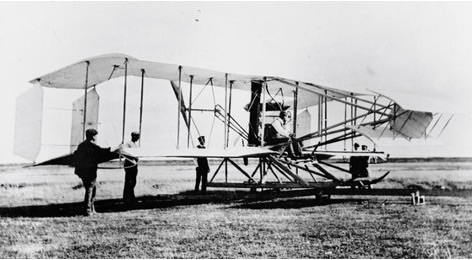
At first, they worked under licence from the Wright brothers, constructing British versions of the Wright Flyer from their workshop at Shellbeach on the Isle of Sheppey. These early projects introduced the Short name to aviation pioneers across Europe.
Before long, they were producing original designs, including the Short No. 1 Biplane (1909), one of Britain’s earliest powered aircraft. They also developed the first twin-engine seaplanes, launching a new era of maritime aviation that made them global leaders in the field.
Innovation in Metal and Air
The Short brothers’ achievements extended far beyond the workshop. Their designs helped define the direction of British aviation for decades.
They were among the first to experiment with all-metal aircraft structures, replacing traditional wooden frames with lightweight alloys. They developed stressed-skin construction, a method that distributed structural loads across the aircraft’s surface – a principle still used in modern aerospace design. They pioneered the use of cantilever wings, removing the need for external bracing wires and reducing drag.
When Horace Short died in 1917, Oswald took over leadership of the company. Under his guidance, Short Brothers continued to expand, supplying the Royal Navy and Royal Air Force with training aircraft, flying boats and heavy bombers.
The Stirling and the Second World War
One of the company’s most significant wartime achievements was the Short Stirling, Britain’s first four-engined heavy bomber. Though its wingspan limitations made it less famous than the Avro Lancaster, the Stirling was a vital part of the Allied war effort.
It was widely used as a training aircraft, allowing RAF crews to gain experience before flying Lancasters and Halifaxes in combat. The Stirling also served in glider-towing, paratroop drops and supply missions, proving its versatility across multiple theatres of war.
The aircraft’s robust design and reliability embodied the Shorts’ engineering philosophy – practical, innovative and ahead of its time.
Training the Next Generation
Oswald Short was not only an inventor but also a teacher and mentor. He introduced one of the earliest formal apprenticeship schemes in British aviation, ensuring that new engineers were trained in every aspect of aircraft design and production – from metallurgy and drafting to aerodynamics and flight testing.
This approach produced a generation of skilled craftsmen and engineers who would go on to work across the rapidly expanding aerospace industry. His emphasis on precision, craftsmanship and innovation helped cement Britain’s global reputation for aviation excellence.
A Lasting Legacy
By the mid-20th century, Short Brothers had become a cornerstone of the British aircraft industry, producing iconic designs such as the Short Sunderland flying boat and, later, the Short Belfast transport aircraft.
In 1943, the company relocated its main operations to Belfast, where it evolved into what is now Shorts Bombardier – continuing a legacy of British engineering and innovation that began in a modest Derbyshire home.
Although Oswald Short never sought fame or recognition, his achievements were widely honoured within the aerospace world. He was made an Honorary Fellow of the Royal Aeronautical Society, and in 1998 was posthumously inducted into the International Air & Space Hall of Fame at the San Diego Air & Space Museum – recognition of a life that helped shape modern aviation.
When he died in 1969, Oswald was remembered as one of Britain’s true pioneers of flight. He left behind more than aircraft and patents – he left a blueprint for how imagination and craftsmanship, born in an industrial village, could change the world.
Yet few realise that this global story began in a quiet corner of Derbyshire – in a red-brick cottage beside the Stanton ironworks where his father and brothers first learned their trade.
That same cottage still stands today at 3 Lows Lane, marked by a blue plaque honouring Oswald’s extraordinary life and achievements.
From the furnaces of Stanton Ironworks to the skies above Britain, the story of the Short brothers remains one of the most remarkable chapters in British industrial history – proof that great ideas can rise from the humblest of beginnings.
It’s a story of ordinary people who dared to imagine something extraordinary.
And it reminds us that Ilkeston, Stanton, and the wider Erewash area have always been places of makers and doers – where skill, creativity and determination truly take flight.

