
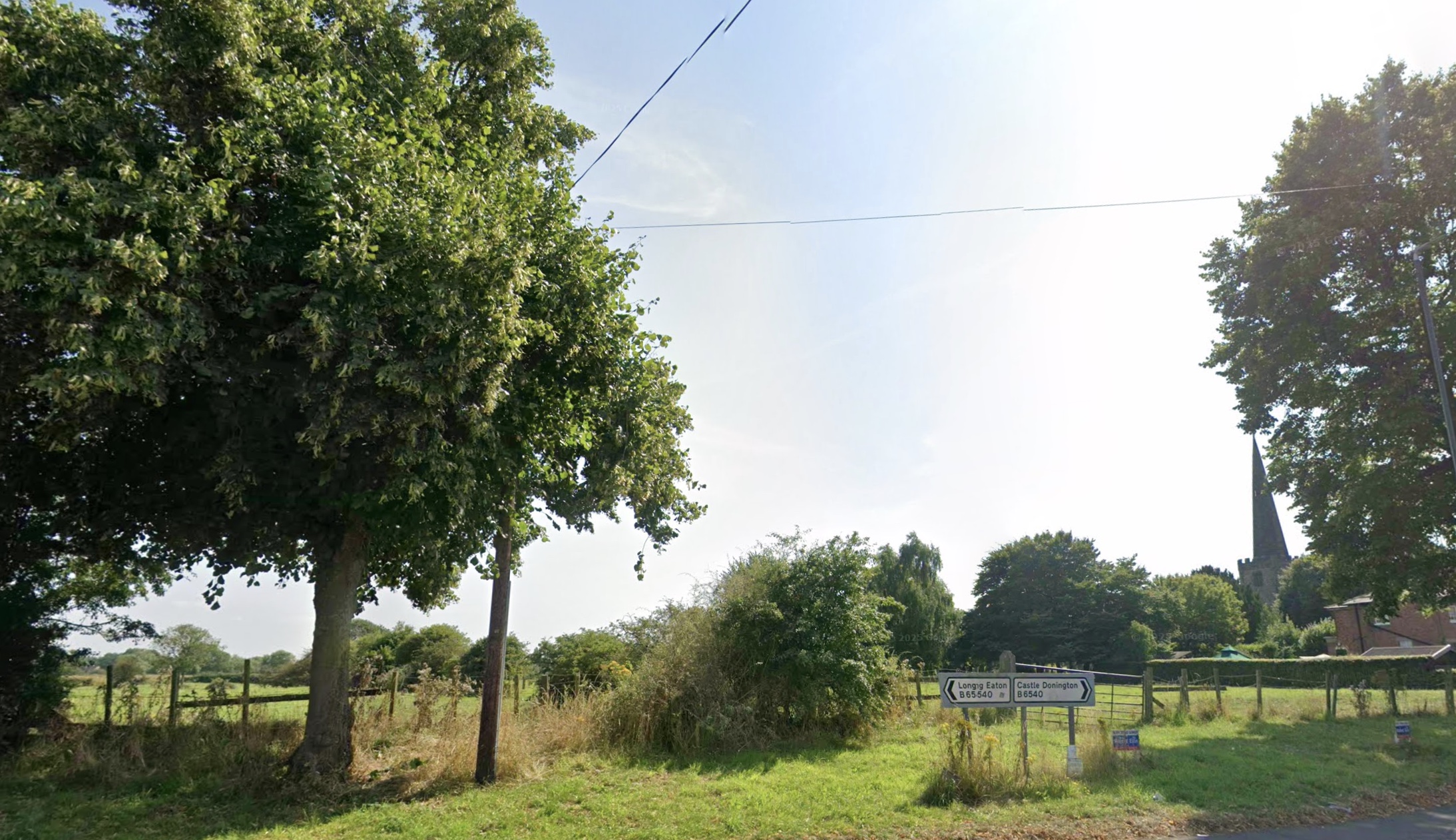
A stretch of farmland in Sawley has become the focus of a fast-moving and increasingly heated local debate – one that raises questions not only about what the land should become, but about how decisions affecting communities are made in the first place.
What makes this situation striking is not just the strength of feeling it has generated, but the speed with which it has escalated. Within the space of a few days, a conversation that had largely faded from view has re-emerged as a point of real tension, drawing in residents, councillors and campaigners, and prompting renewed scrutiny of how Erewash Borough Council is making and communicating decisions.
A conversation that seemed to go nowhere
The story does not begin with contractors or machinery, but with a question.
Last year, Councillor Harry Atkinson asked residents what they would like to see happen to the field – a piece of land between All Saints Church and homes along Tamworth Road. The post prompted a wide response. Suggestions ranged from nature-based uses, including woodland and wildlife areas, to more community-focused ideas such as allotments or shared green space.
Yet running through those responses was a consistent theme. Many residents said they would prefer the land to remain in agricultural use – not just as open space, but as a working field tied to a local farming family and a long-standing part of Sawley life.
After that initial discussion, however, there was little by way of follow-up. No clear update was shared, no timeline was set out, and no indication was given as to how those views might inform any future decision. The conversation appeared, at least on the surface, to have gone quiet.
There was no indication at that point that any work on site was imminent.
Then came Monday
That changed abruptly last week.
On Monday morning, contractors arrived on the field and began cutting back hedgerows and removing trees along its boundaries. For many residents, this was the first indication that anything had progressed beyond the earlier public discussion. There had been no widely communicated update or clear explanation that work on the ground was imminent. Instead, the shift came physically – through the sudden presence of machinery and the visible alteration of a landscape that, until then, had largely remained unchanged.
As images of the work began to circulate online, so too did the reaction. Within hours, local social media groups were filled with questions, speculation and frustration. The tone was not simply one of curiosity, but of surprise – and, for some, of being caught off guard by something they felt they should have known about in advance.
Ilkeston News contacted Erewash Borough Council on Wednesday morning seeking clarification. That evening, the authority issued a press release outlining its plans for the land. It confirmed that the site is being considered for transformation into a nature-focused green space, potentially including woodland planting and habitat creation, with the stated aim of enhancing biodiversity and supporting wildlife.
The council also made clear that housing is not being proposed for the site, and that there are no plans for a car park or play area. On paper, the proposal reflects ideas that had been raised during the earlier consultation.
But for many residents, the issue is not simply what is being proposed, but how – and when – it has been brought forward.
A response that came after the event
The timing of the council’s announcement has become central to the debate.
For those watching events unfold, the sequence was difficult to ignore. Work had already begun on site before any formal explanation was provided. The press release, while offering clarity on intent, came after the most visible stage of change had already taken place.
That has led to a broader question: whether the process has been handled transparently – or whether decisions had effectively been made before residents were updated.
The timing has also raised questions about cost.
With contractors already on site carrying out work, residents are now asking what level of public money has been committed so far, and whether that spending took place before any clear plan had been agreed or communicated.
At this stage, no breakdown of costs has been published. However, the issue has added to wider concerns about how the project is being managed.
Across hundreds of comments, a pattern emerges. Residents are not uniformly opposed to change. Some support the idea of a nature reserve, particularly if it brings long-term environmental benefits, while others have suggested alternative uses that would retain a sense of community ownership.
What links many of those views, however, is a shared concern about communication. Even among those open to the council’s plans, there is a sense that the process has not unfolded transparently.
The environmental question
Alongside questions of process, attention has also turned to the nature and timing of the work itself.
The removal of hedgerows and vegetation has prompted concern among some residents about potential impacts on wildlife, particularly during the spring nesting season. Under the Wildlife and Countryside Act 1981, it is an offence to damage or destroy an active bird’s nest. While hedge cutting is not automatically prohibited at this time of year, it carries clear responsibilities and requires appropriate checks to ensure wildlife is not harmed.
At this stage, there is no confirmed evidence that any laws have been breached. However, the issue has added another layer to the discussion, raising questions about what assessments were undertaken before work began and how environmental considerations were balanced against the proposed long-term benefits.
Farming, biodiversity, and competing narratives
For many, the debate extends beyond process and into the question of what the land already represents.
The field has been farmed for decades, and has been associated with the same family for generations. For many residents, the presence of grazing cattle is part of everyday life in Sawley, and part of what gives the area its character. In that context, the idea of replacing an active farming use with a new designation – even one framed around nature – has raised questions about what is being lost as well as what is being gained.
That view has not disappeared. In the days since work began on site, similar calls have resurfaced, with residents questioning whether continuing the existing farming use – or even allowing it to continue through sale or tenancy – was ever seriously considered.
At the same time, there is a growing counterpoint to the council’s vision of environmental improvement. Some individuals with long-standing connections to the land have argued that it already supports a wide range of wildlife, pointing to hedgerows, small mammals and birdlife that have developed under its existing use. In their view, what is being presented as a biodiversity project risks overlooking the ecological value already present.
This has created a tension that sits at the heart of the issue: a difference in how the land is understood. For the council, it is a site with potential to be enhanced. For others, it is a space that has already been shaped, managed and valued over many years.
From reaction to mobilisation
In the days following the work on site, the response has moved beyond individual concern and into organised action.
A petition calling on the council to reconsider its plans has gathered more than 1,250 signatures within a short period, reflecting a level of engagement that is difficult to ignore.
While the petition calls for the council to rethink its approach, a significant number of those supporting it have made clear they would prefer to see the land remain in farming use – either through continued tenancy or, potentially, through a sale to the existing farming family.
The campaign is calling for a pause on further work, greater transparency about the council’s intentions, and meaningful engagement with residents before any final decisions are taken.
A wider question of trust
What is unfolding in Sawley is not simply a disagreement about land use. It is a test of process.
Local authorities regularly seek public input on matters that affect shared spaces. When that input appears to lead to limited visible outcome, or when subsequent actions seem disconnected from it, the process itself begins to come under scrutiny.
In this case, the question is not only whether the land should become a nature reserve, remain as farmland, or take on another role. It is whether the route taken to reach that point can command the confidence of those who were initially asked for their views.
For many residents, the question is no longer just what the land becomes – but whether an existing farming use could, and should, have been allowed to continue.
What happens next
For now, the future of the site remains uncertain.
The council has outlined its intentions, but the level of public response suggests that the issue is far from settled. Residents continue to ask questions, campaigners are organising, and attention is now focused on whether there will be further engagement before plans move forward.
What began as a quiet consultation has become something much more visible – and much more contested.
And as the debate continues, the focus is shifting. It is no longer just about what happens to one field.
It is about whether the decisions that shape local places are made with communities – or simply presented to them after the fact.
Because once that distinction becomes unclear, it is not just one decision that is questioned – but the process behind many others.
In the absence of clear information, questions about both process and cost are now filling the gap left behind.
Your say
What should happen to the land – and do you think residents were properly consulted?
Let us know in the comments.
You can sign the petition here: https://www.change.org/p/petition-to-save-sawley-farmland