
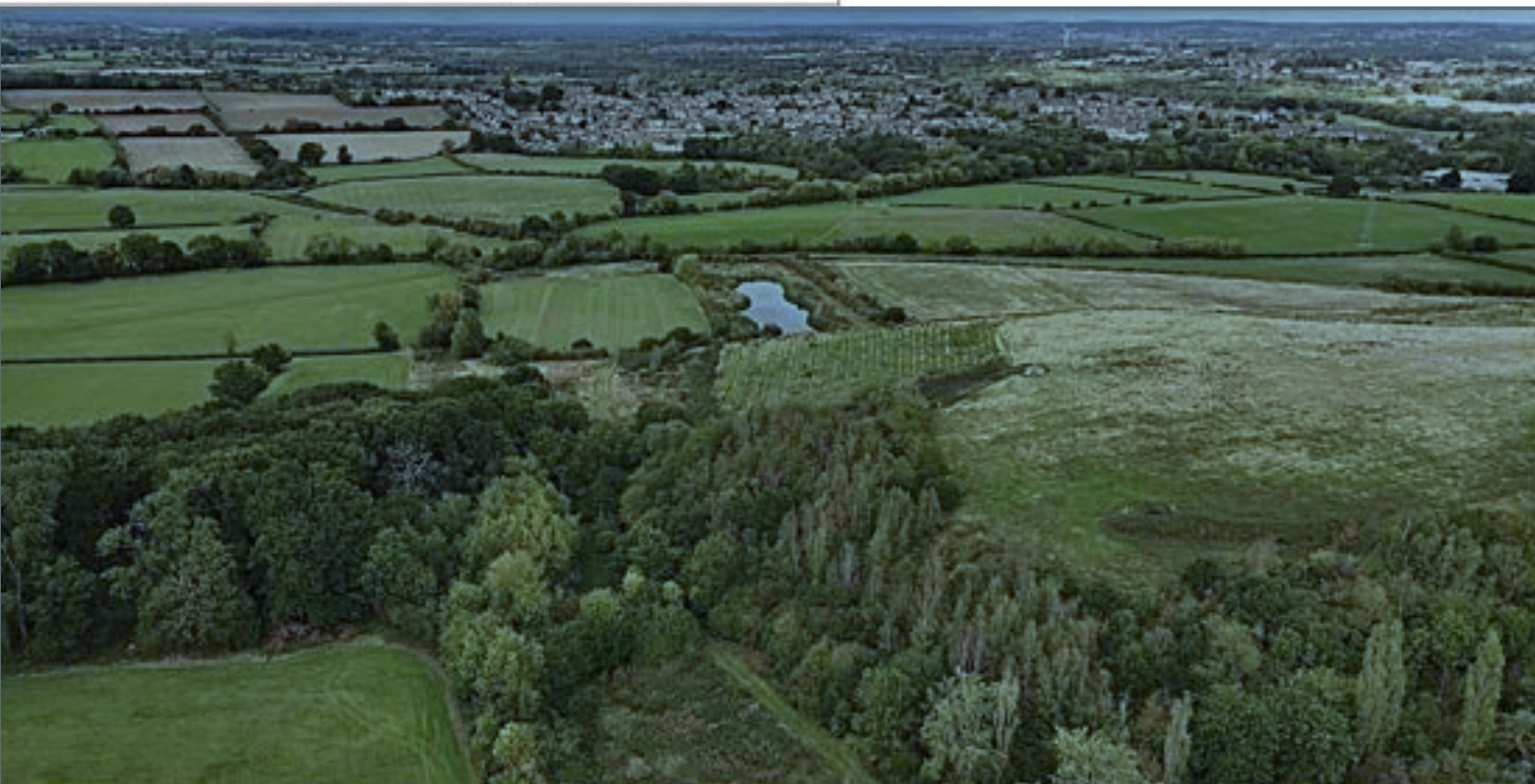
For many people, the land to the south of Ilkeston looks unremarkable. Fields. Slopes. Green views stretching out towards the horizon.
But for residents who have lived here for decades, and for those who have taken the time to dig into the area’s industrial past, the ground beneath that landscape tells a very different story.
Long before it was grassed over and reshaped, parts of this land were used for heavy industry. Locals say large quantities of industrial waste were deposited here over many years, then later capped, landscaped and largely forgotten.
What remains beneath the surface, they argue, is not folklore or rumour, but a legacy that continues to raise serious questions.
A history hidden in plain sight
Residents with long memories recall wagons tipping waste from former ironworks operations onto the land, particularly during the mid-20th century.
They point to oral histories, historic photographs, maps and aerial imagery which they say show clear evidence of large-scale dumping, long before modern environmental controls or record-keeping standards were in place.
Over time, the site was reshaped. Soil was brought in. Grass was planted. Trees were added. From a distance, the land began to resemble open countryside.
But, locals say, landscaping does not erase history. It simply conceals it.
A capped site, not a clean one
One of the key distinctions residents make is between a site being capped and a site being remediated.
Capping involves sealing material beneath layers of soil or protective membranes to reduce exposure. It does not remove what lies underneath.
Residents say this area was capped decades after waste was deposited, at a time when environmental standards were far less rigorous than those in place today. In some locations, they believe the cap is now showing signs of age, erosion and thinning, particularly following prolonged periods of wet weather.
Photographs taken over time show uneven ground settlement, sparse vegetation in places, and surface water collecting in areas where residents say it did not previously pool.
Why concern hasn’t faded
People living nearby stress that their concerns are not abstract or hypothetical. They point to unanswered questions around:
- what exactly was deposited on the land, and over what period
- whether records from the time were complete, consistent or even required
- how deep the deposited material extends
- what long-term monitoring, if any, is currently in place
- how changes in land use could affect the integrity of the cap
They also note that historic industrial waste frequently contained substances that would now be classed as hazardous, a reality acknowledged nationally across many former ironworks and steelmaking areas.
The planning question
What has reignited concern in recent years is not only the past, but the future.
Residents argue that any proposals affecting nearby land should be considered in the context of what lies beneath the surface, not just what is visible today. They question whether sufficient independent investigation has been carried out, and whether assumptions are being made based on appearance rather than evidence.
Some also ask whether information held by authorities is complete, accessible and up to date, and whether the public has been given a clear, plain-English explanation of potential risks, however small those risks may be judged to be.
“This isn’t scaremongering”
Those involved in researching the site are keen to stress that they are not opposing development in principle, nor claiming any immediate danger.
Instead, they describe their concerns as rooted in transparency, due diligence and learning from history.
“Land remembers,” one resident told Ilkeston News. “Even when people don’t.”
They argue that asking difficult questions now is far preferable to uncovering uncomfortable answers later.
Why this matters
Across the UK, former industrial land has repeatedly been found to hold unexpected legacies decades after being redeveloped or reclassified. In some cases, problems only came to light after changes to drainage, construction activity or prolonged weather events disturbed what had long been sealed away.
Residents say Ilkeston should learn from those experiences, not repeat them.
For now, the land remains quiet. Green. Unassuming.
But for those who know its past, the silence beneath the surface is precisely why the questions have not gone away.


